
Introduction: Sauna Room FAQ
This sauna room FAQ is a practical guide to understanding sauna rooms.
Right from the beginning, the goal is simple.
This sauna room FAQ explains what sauna rooms are, how they work, and how people use them safely.
Sauna rooms are not new.
However, modern sauna room designs have changed how people experience heat therapy.
Because of that, many people now ask similar questions:
-
What types of sauna rooms exist?
-
How are infrared sauna rooms different?
-
Are sauna rooms safe?
-
How should a sauna room be maintained?
This sauna room FAQ answers those questions clearly and step by step.
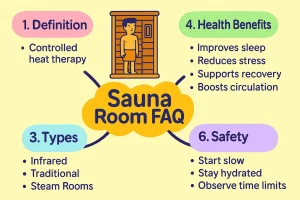
1. What Is a Sauna Room?
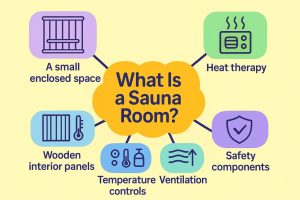
A sauna room is a small enclosed space designed for heat therapy.
In simple terms, a sauna room creates controlled heat that allows the body to warm up and sweat.
As a result, many people feel relaxed after a session.
According to Wikipedia(https://en.wikipedia.org/wiki/Sauna), sauna bathing has been practiced for thousands of years and is closely tied to cultural traditions, especially in Northern Europe
Most sauna rooms include:
-
Wooden interior panels
-
A heating system
-
Temperature controls
-
Ventilation
-
Safety components
Because sauna rooms control heat carefully, people use them in homes, gyms, spas, and wellness centers.
2. Why Do People Use Sauna Rooms?
People use sauna rooms for different reasons.
First, heat helps muscles loosen after physical activity.
Second, quiet time in a sauna room supports mental relaxation.
Finally, many people enjoy the routine itself.
In addition, sauna rooms often serve as social spaces.
For example, in Finland, families and friends regularly gather in sauna rooms.
Because of this, sauna culture remains a daily habit rather than a luxury.
UNESCO even recognizes Finnish sauna culture as part of humanity’s intangible cultural heritage
👉 https://www.unesco.org/en/intangible-cultural-heritage
3. Types of Sauna Rooms (Sauna Room FAQ Overview)
The biggest difference between sauna rooms is how they create heat.
Although the goal stays the same—warming the body—the method changes the experience.
3.1 Traditional Finnish Sauna Rooms
Traditional Finnish sauna rooms heat the air inside the cabin.
A heater warms stones, and users pour water over them to create steam, called löyly. As a result, the temperature feels intense and enveloping.
Key features include:
-
High air temperature
-
Dry heat with optional steam
-
Wood-lined interiors
Traditional sauna rooms have been used for centuries.
Therefore, they remain closely connected to Nordic culture and social rituals.
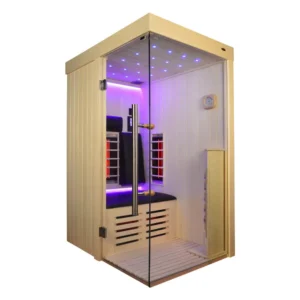
3.2 Infrared Sauna Rooms
Infrared sauna rooms work differently.
Instead of heating the air, infrared panels send radiant heat directly to the body.
Because of this, the room can feel warm even at lower air temperatures.
Many people prefer infrared sauna rooms because:
-
Sessions feel gentler
-
Warm-up time is shorter
-
The temperature feels easier to control
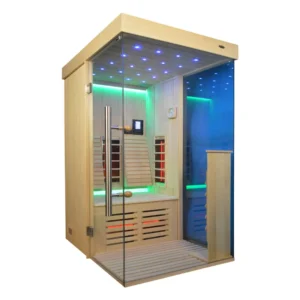
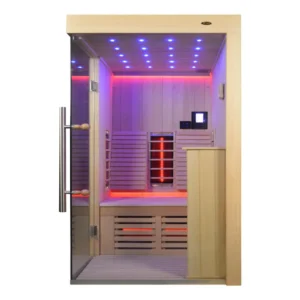
Modern infrared sauna room layouts often look like the following examples:
These designs reflect how infrared technology fits into modern sauna rooms.
3.3 Steam Rooms
Steam rooms use moist heat instead of dry heat.
They fill the space with steam, creating very high humidity.
As a result, the heat feels softer on the skin and lungs.
Because of this environment, steam rooms are common in spas and wellness facilities.
4. Indoor vs Outdoor Sauna Rooms
Sauna rooms can also be grouped by location.
4.1 Indoor Sauna Rooms
Indoor sauna rooms are the most common.
They:
-
Work year-round
-
Stay protected from weather
-
Fit easily into homes or gyms
Because indoor sauna rooms operate in controlled environments, they are easier to manage and maintain.
4.2 Outdoor Sauna Rooms
Outdoor sauna rooms offer a different experience.
They allow people to enjoy heat while surrounded by nature.
However, outdoor sauna rooms must handle rain, temperature changes, and moisture.
Because of that, outdoor sauna rooms require stronger materials and better sealing.
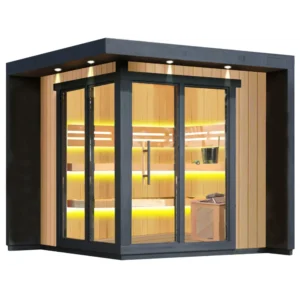
A purpose-built outdoor sauna room designed for these conditions can be seen here.
5. Health Benefits of Sauna Rooms
Regular sauna use is often linked to both physical and mental benefits.
According to UCLA Health, sauna bathing may support relaxation, circulation, and recovery
People who use sauna rooms often report:
-
Better sleep
-
Reduced stress
-
Improved mood
-
Relaxed muscles
Heat causes blood vessels to widen.
As circulation improves, muscles and joints often feel less tense afterward.
5.1 Physical Health Benefits
From a physical point of view, sauna rooms:
-
Encourage sweating
-
Promote circulation
-
Help muscles recover
Although sauna rooms are not a medical treatment, many people include them as part of a healthy routine.
5.2 Mental and Emotional Benefits
Sauna rooms also support mental well-being.
Quiet heat creates space to slow down.
Because of this, sauna sessions often feel meditative.
For thousands of years, people have used sauna rooms to disconnect from daily stress.
6. Safety Considerations (Sauna Room FAQ)
Sauna rooms are generally safe when used properly.
However, basic safety rules matter.
6.1 General Sauna Room Safety
To use a sauna room safely:
-
Drink water before and after sessions
-
Start with short sessions
-
Leave immediately if dizziness occurs
Avoid using sauna rooms under the influence of alcohol.
6.2 Electrical Safety
Sauna rooms rely on heaters, controls, and wiring.
Because electricity and heat work together, proper installation is essential.
If you notice overheating, burning smells, or exposed wiring, stop using the sauna room and have it checked.
6.3 Special Populations
Certain groups should take extra care, including:
-
Pregnant individuals
-
People with heart conditions
-
People taking blood pressure medication
In these cases, medical advice is recommended before sauna use.
7. Sauna Room Maintenance and Care
Good care keeps a sauna room comfortable and long-lasting.
7.1 Routine Cleaning
After each sauna session:
-
Let the room dry fully
-
Keep ventilation open
Regular cleaning includes:
-
Wiping benches and walls
-
Cleaning floors and drains
-
Keeping glass clear
7.2 Long-Term Maintenance
Over time, sauna rooms benefit from:
-
Heater inspections
-
Electrical checks
-
Deep cleaning when needed
Because of regular care, many sauna rooms last for decades.
7.3 Troubleshooting Common Issues
Even well-built sauna rooms may face issues such as:
-
Uneven heating
-
Moisture buildup
-
Control panel errors
Early checks usually prevent small problems from growing larger.
8. Sauna Room FAQ (Detailed)
This section answers the most common sauna room FAQ questions clearly.
8.1 How Often Should I Use a Sauna Room?
Most people use a sauna room 2–4 times per week.
Some people use it daily, while others prefer once a week.
Both approaches can be beneficial.
8.2 What Is Sauna Bathing?
Sauna bathing means sitting in a heated room for a short time.
Sessions usually last:
-
5–10 minutes for beginners
-
Up to 20 minutes for experienced users
Cooling down afterward is part of the routine.
8.3 What Health Benefits Are Linked to Sauna Rooms?
Research suggests sauna use may support:
-
Relaxation
-
Circulation
-
Muscle recovery
-
Stress reduction
Long-term studies also link regular sauna use to improved overall well-being.
8.4 Are There Risks Associated With Sauna Rooms?
Yes, especially when used incorrectly.
Risks increase when:
-
Alcohol is involved
-
Sessions last too long
-
Users ignore warning signs
Listening to your body matters.
8.5 How Should I Prepare for a Sauna Session?
Before using a sauna room:
-
Drink water
-
Eat lightly
-
Remove heavy clothing
Start slow, especially if you are new.
8.6 What Is the Difference Between Traditional and Infrared Sauna Rooms?
Traditional sauna rooms heat the air.
Infrared sauna rooms heat the body directly.
Both offer relaxation, but the experience feels different.
8.7 Can Sauna Rooms Be Used Year-Round?
Yes.
Indoor sauna rooms work year-round.
Outdoor sauna rooms also work year-round when designed for weather exposure.
8.8 How Long Does a Sauna Room Last?
With proper care, a sauna room can last many years.
Regular cleaning and inspections make the biggest difference.
Final Thoughts
This sauna room FAQ shows that sauna rooms are simple by design.
Heat.
Wood.
Quiet.
Although styles and technologies change, the purpose stays the same.
A sauna room creates space to relax, recover, and slow down.